What is Train Communication Network (TCN) railway communication standard
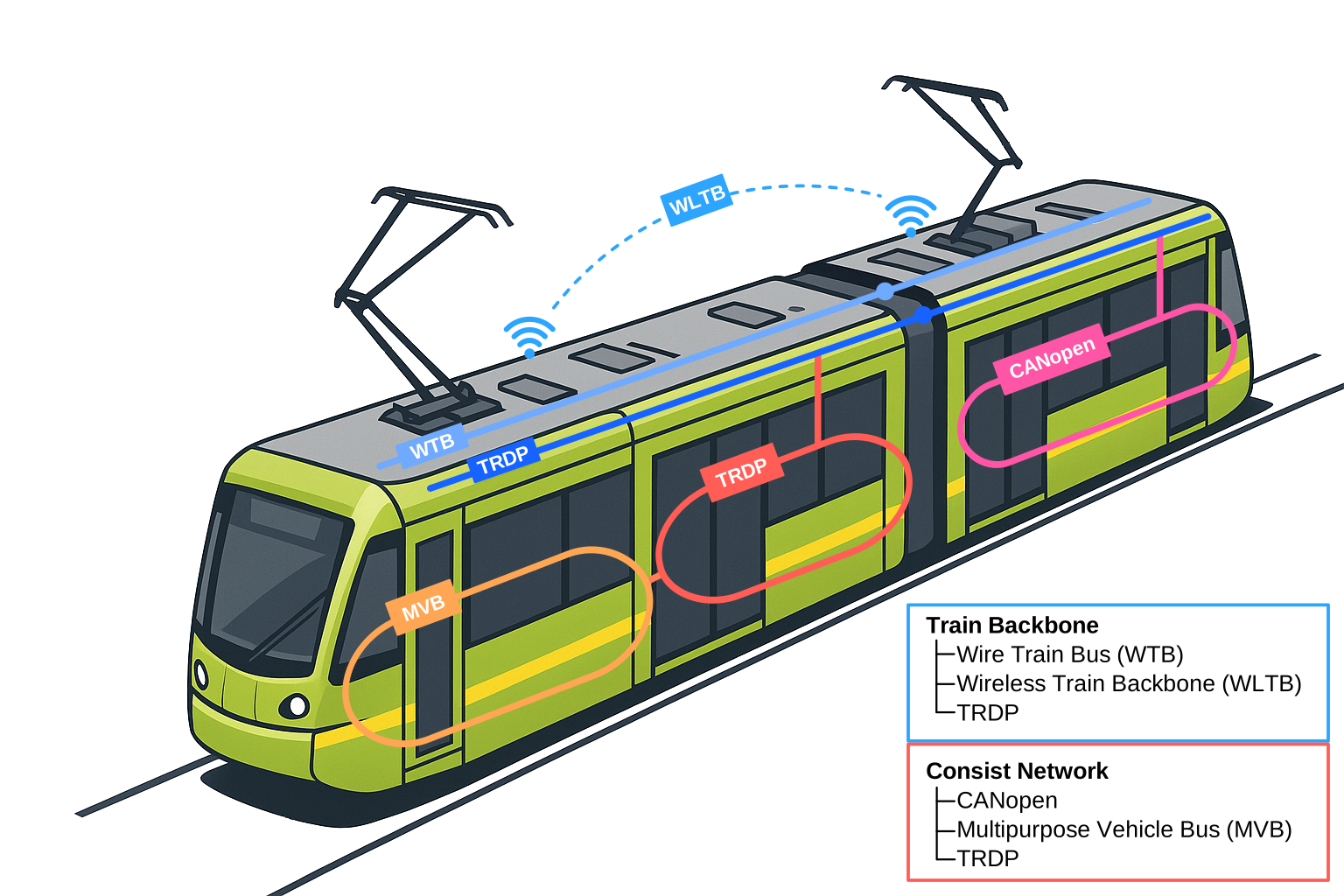
Table of contents
- Table of contents
- Definition
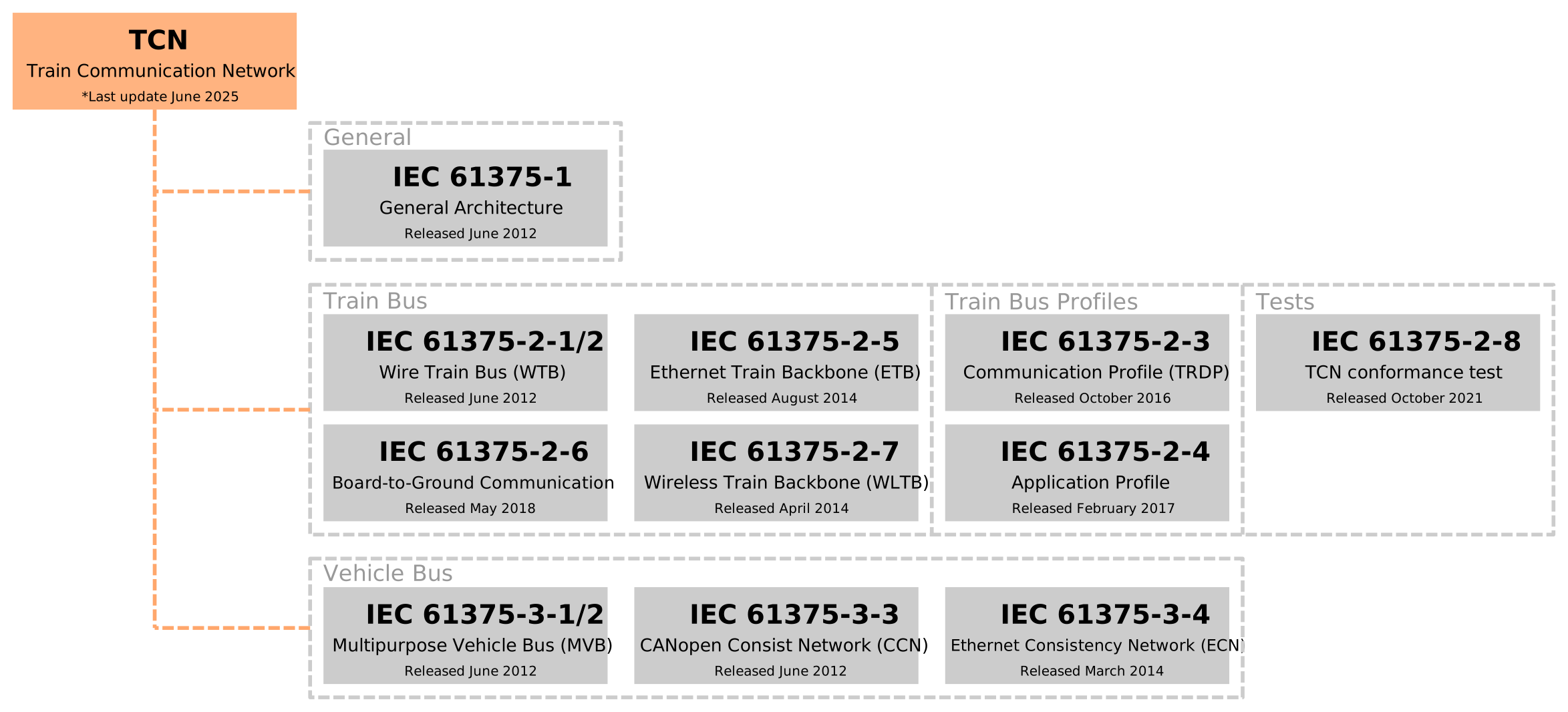
- TCN standard overview
- Core concepts
- Train inauguration as part of train backbone
- Communication patterns
- Communication data clases
Definition
Train Communication Network (TCN) is an international standard network used for communication within train. TCN is specified by the IEC 61375 standard.
The scope is to ensure interoperability and reliable communication between devices on the train and between multiple trains.
TCN standard overview
Core concepts
Train composition
Train is a composition of closed trains, each closed train having one or several consists and each consist having one or several vehicles.
With a maximum number of 63 vehicles.

 TCN train structure
Network levels: Train backbone & Consist network
TCN as a hierarchy of two network levels, a train backbone (TB) level and a consist network (CN) level. And consist networks are connected to the TB with train backbone nodes (TBN).

 TCN train network
Train backbone
It is a communication network that links all parts of a train., connecting the control networks of each coach/car (train backbone nodes, TBN). It is the main “highway” for data exchange across the entire length of the train, enabling coordinated operations between cars and centrally managed functions.
To configure, it is necessary to:
- List possible train compositions (“topologies”)
- Define directions and orientation on vehicle, consist, closed train and train level
- Do the train inauguration
- Finally define the implemented TB services
Communication protocols used: Wire Train Bus (WTB) or Ethernet Train Backbone (ETB).
Consist network
It is a communication network that connects the electronic systems within a single vehicle/car/coach (the “consist”). It allows onboard devices and control units in the same car to communicate and share data.
Communication protocols used: Multifunction Vehicle Bus (MVB), CANopen or Ethernet Consist Network (ECN).
Communication technology classes
These network technologies can be classified in two technology classes:
- Bus technology class. Wire Train Bus (WTB), Multifunction Vehicle Bus (MVB) and CANopen.
- Switched technology class. Ethernet Train Backbone (ETB) and Ethernet Consist Network (ECN).
Train inauguration as part of train backbone
The train inauguration protocol is executed in all active TBN whenever a train is formed, vehicles are (dis)connected, or is powered up and determine:
- The sequence of all active TBN in a train (see an example video TTDP, Train Topology Discovery Protocol)
- Orientation of the consist, where a node is located in, with respect to the train orientation.
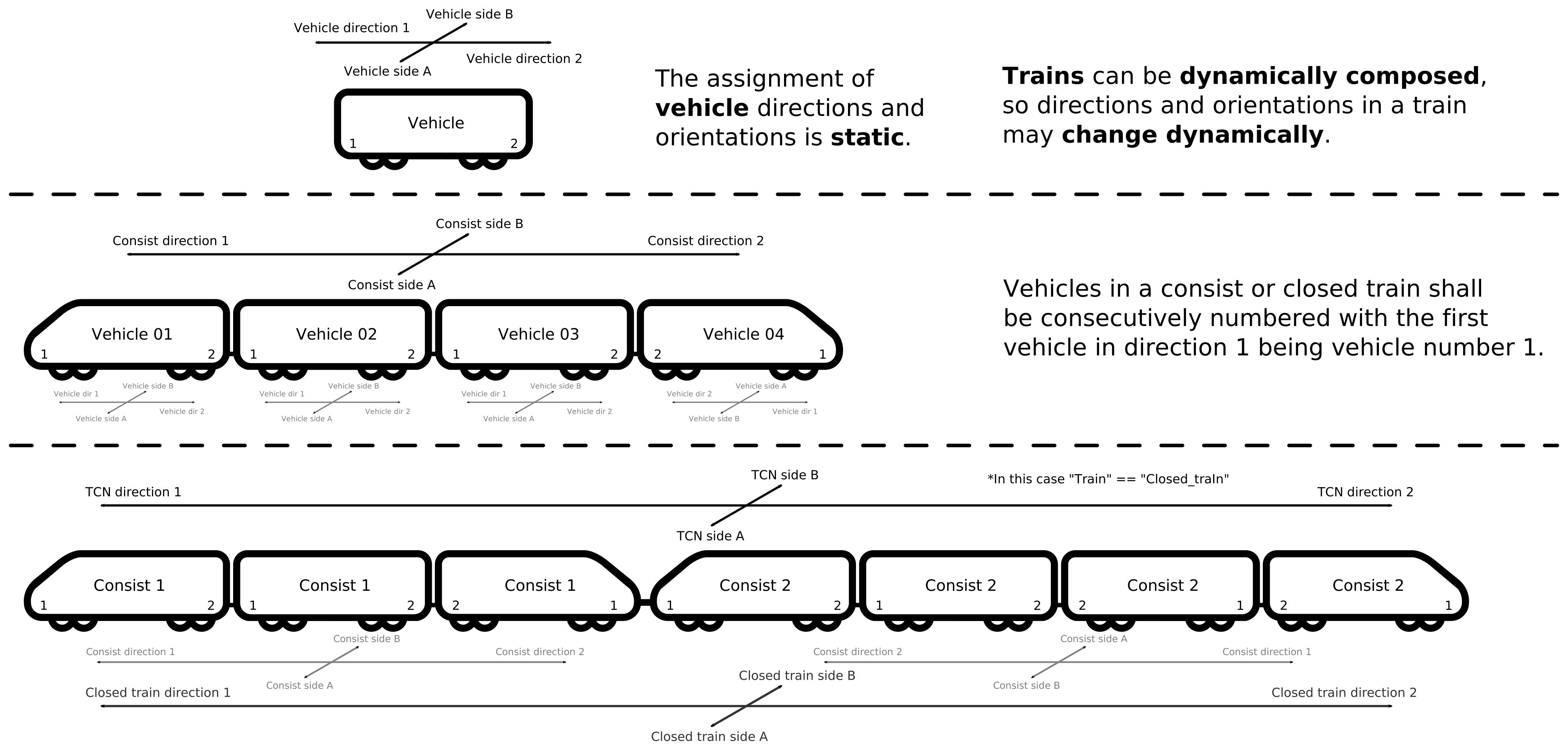
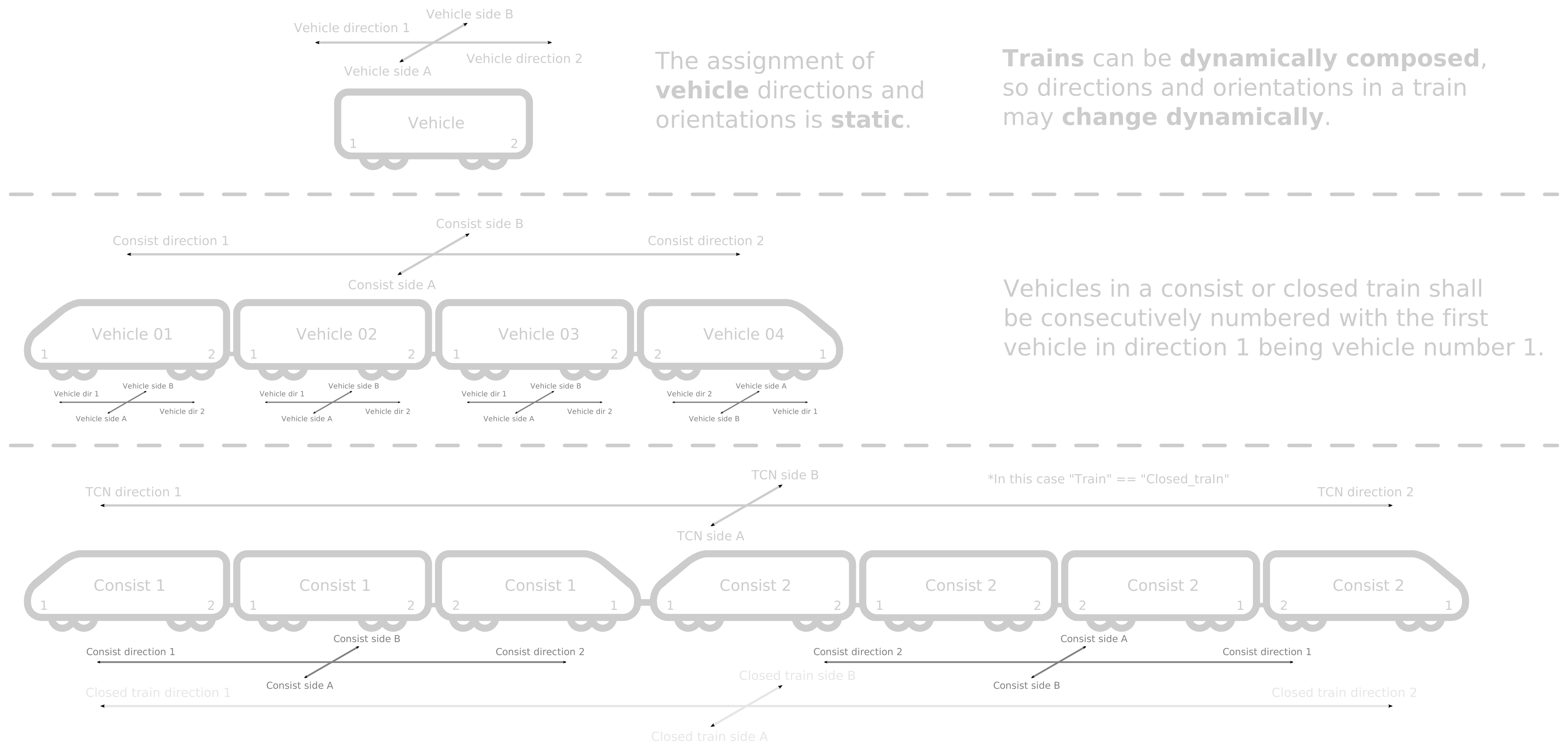 Train backbone TCN train directions
Depends on the technology of the train backbone: WTB or ETB.
Communication patterns
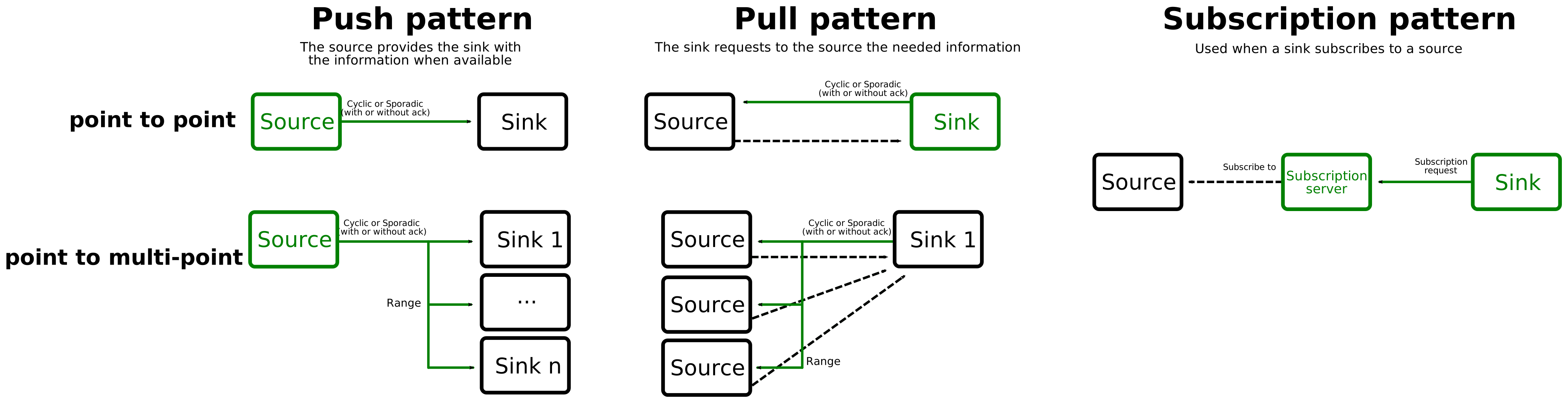
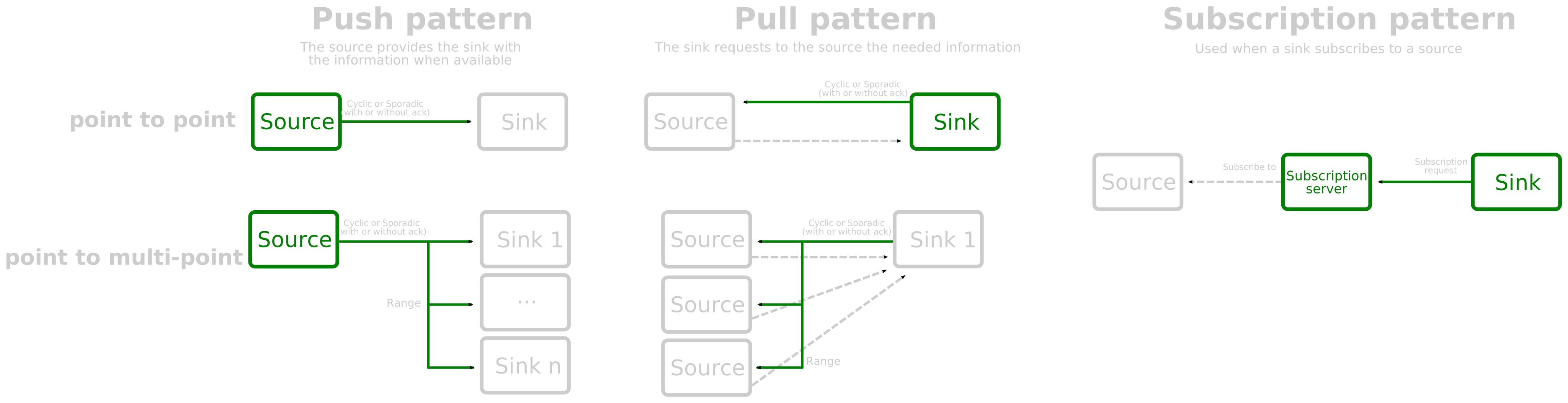 TCN communication patterns
Communication data clases
TCN defines five main data classes. Detailed service parameter definitions are provided in application-specific communication profiles.
| Data class | Description | Service parameters |
|---|---|---|
| Supervisor | Data for network operation tasks, like setup or redundancy control | |
| Process | Real-time control and monitoring data | - Data rate ↓ - Cyclic transmission - Latency ↓ - Jitter ↓ - Data integrity ↑ - Safety integrity ↑ |
| Message | Control and monitoring messages | - Data rate ↓ to - - Latency - - Data integrity ↑ - Safety integrity ↑ |
| Stream | Video or voice data packets | - Data rate ↑ - Latency ↓ - Jitter ↓ - Safety integrity ↓ |
| Best effort | Bulk transfers or non-critical activities that must not disrupt other data classes |
Service paramentes
Each data class has communication service parameters that define its transmission characteristics.
| Service Parameter | Description | Unit |
|---|---|---|
| Data packet size | Amount of data transmitted in one packet | number of octets |
| Data (packet) rate | Number of packets sent per second | bits/s, Kbit/s, Mbit/s |
| Cycle time | Time between sending two packets (only for cyclically data) | seconds |
| Latency | Time for a packet to travel from source to sink | seconds |
| Jitter | Variation in packet transmission time | seconds |
| Data integrity | Packet arrives without errors | bit error rate (BER) |
| Safety Integrity | Probability that errors (data corruption, sequence, timing or authentication) will be detected | Probability of dangerous undetected failures per hour (Pdu) |